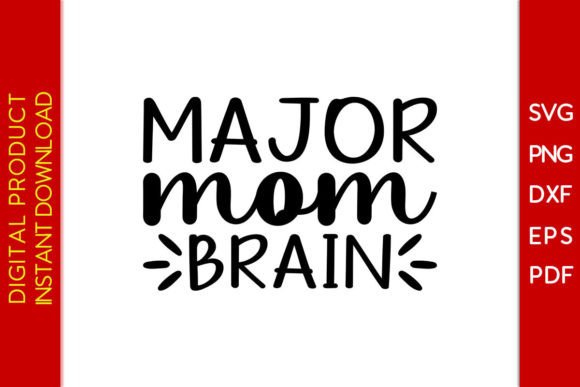
Is the Major Mom Brain SVG Cut File a Smart Embroidery Choice?
Let's get straight to the point. You've downloaded the Major Mom Brain SVG Cut File, and you're staring at it on your screen, wondering if it's worth the hoop time. As someone who stitches for clients, for my small shop, and for gifts, my first question is always: will this design translate into a great finished product? Here’s my practical take, from the perspective of putting thread to fabric.
The Personality Behind the Pixels
The first impression of this design is playful and relatable. It’s not a clinical anatomical drawing; it’s a brain with character. The concept speaks directly to a niche—parents, caregivers, anyone juggling a million thoughts. That’s powerful for a custom apparel or personalized gift. Visually, the layout feels balanced, with details that suggest it could work well as a central motif. It doesn’t scream "holiday" or "wedding"; it’s more of an everyday, humorous, and slightly defiant statement. That tells me it belongs on items people use regularly: tote bags, sweatshirts, kitchen towels, or aprons. It feels like a design for a comfortable, well-loved item.
Where This Brain Finds Its Best Home
In real-life embroidery situations, I envision this design succeeding in a few key areas. For a custom embroidered tote bag—a staple for craft fairs and Etsy shops—this brain would be a conversation starter. Stitched on a durable cotton canvas, it becomes a functional, witty accessory. On a relaxed-fit sweatshirt, it taps into that cozy, self-aware mood that sells well in boutique merchandise. For baby items, like a burp cloth or a simple wall decoration for a nursery, it could be a fun gift for a new parent, though the theme is more for the mom than the baby.
As an embroidered patch, it’s versatile. You could stitch it onto a cap or a backpack, creating a standalone product. For home decor, a pillow cover with this design would be a bold, personal touch. The key is matching the design’s casual, intelligent personality with a product that has a similar vibe. It wouldn’t feel right on a formal tea towel set, but on a modern, minimalist apron? Absolutely.
The Stitching Reality: Considerations Before You Hoop
This is where design files meet the machine. Without specific stitch counts or hoop sizes provided, we have to think generically. The design’s detail level, from the outline to the internal "thought" elements, suggests it needs a respectable hoop size to maintain clarity. Trying to cram it into a tiny 3x3 hoop for a baby shirt might lose the charm. On stretchy fabric like a t-shirt, you’d need a robust stabilizer to prevent puckering, especially if the fill areas are dense.
Dark fabric is a classic test. A design like this, with potential for open spaces and lines, needs good thread color contrast. Would it work in white thread on a black sweatshirt? You’d need to test that. The tiny lettering or intricate corners, if present, are where your machine and thread choice prove their worth. A satin stitch border might look great, but on a curved surface like a cap, you’d need to consider distortion.
Spots to Approach with Care
Some applications require extra thought. Textured fabrics, like a thick blanket, can swallow finer details. Products that need frequent washing, like kitchen towels, demand durable stitching—a dense fill stitch might hold better than a delicate running stitch outline. For layered garments with pockets or seams, placement is critical to avoid awkward stitching angles. And for any commercial embroidery project you plan to sell, the absolute first step is confirming the licensing for finished items. The product description mentions use for clothing and crafts, but always verify the terms before selling.
Why This Design Adds Value to Your Work
Beyond the stitch, a design affects your business. The Major Mom Brain SVG Cut File has a clear, recognizable theme that builds customer engagement. It’s not generic. When someone sees it on a tote at a craft fair, they immediately get the joke. That connection speeds up a sale. For giftability, it’s a winner—it feels personal and thoughtful.
For your handmade presentation and brand consistency, if your shop leans toward witty, modern, or parenting-themed items, this design fits seamlessly. It looks professional when stitched well, enhancing customer trust. As a digital product seller, if you're creating printable mockups or using it as a design asset in your own listings, its strong visual personality helps your previews stand out.
A Designer's Practical Checklist Before Stitching
Here’s my routine, and I recommend it for this design:
- Test on scrap fabric first. Use the same material you plan for the final product.
- Check thread color contrast against both light and dark backgrounds. Create simple black and white mockups on your computer to judge the silhouette.
- Review the implied stitch density in the file. Are there large solid areas? They may require more stabilizer.
- Confirm the physical hoop size you’ll need. Measure the design dimensions and compare to your product.
- Inspect the small details in the digital file. Are there any corners or lines too fine for your preferred fabric?
- Use the proper stabilizer for your fabric type. Don’t guess.
- Finally, ask yourself: does this embroidery file work for both personal projects and my commercial plans? And have I confirmed the license for the use I intend?
The Major Mom Brain SVG Cut File strikes me as a design with a strong identity. It won’t fit every project, but for the right one—a witty tote bag for a small shop, a personalized sweatshirt for a client, or a humorous patch for a craft fair—it has the potential to stitch up beautifully. Its value isn’t just in the digital file; it’s in the finished product it helps you create, and the smile it might bring to your customer’s face. That’s always the best part of the job.